
Emergency Department
High-throughput intake, waiting-area volatility, and public-flow control.
Hospitals operate under constant throughput, high stress, and elevated liability. Motorcade provides armed security designed for clinical continuity, staff protection, and disciplined incident response.
High volatility, intake pressure, public flow, and fast-changing escalation conditions.
Controlled response, de-escalation support, and staff protection in elevated-risk settings.
Lobby, intake, and visitor-entry areas where visibility and rapid incident routing matter.
High-throughput intake, waiting-area volatility, and public-flow control.

Controlled response posture, de-escalation support, and staff protection.
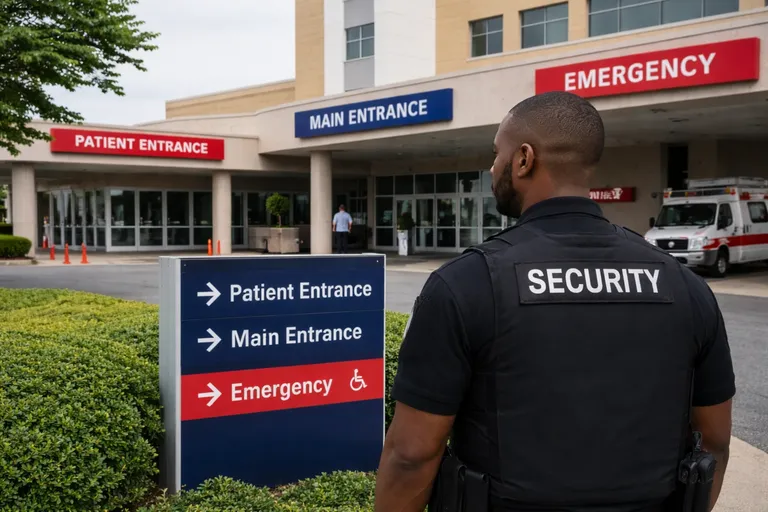
Visitor-entry visibility, screening flow, and rapid incident routing.
Maintain controlled visibility and escalation discipline through intake surges and handoff delays.
Support clinician safety near triage, behavioral corridors, and visitor-transition chokepoints.
Shift-level reporting and supervisor checks keep response outcomes auditable and defensible.
Emergency departments, behavioral escalations, and 24/7 public access create conditions where delayed response or unclear post responsibilities quickly become safety and legal risks.
We align visibility, access posture, and escalation triggers to protect clinicians and patients while preserving operational flow at intake, triage, and high-pressure care points.
We support hospitals and medical systems across Texas, with metro-specific planning available when location-level routing, clinical escalation control, and shift-continuity requirements vary by city.
Assessment-led planning starts with exposure reality, not assumptions. This baseline compares reported violence-related injury rates by workforce segment.
Healthcare and social assistance workers experience materially higher workplace-violence injury rates than workers overall, which is why intake control, escalation readiness, and staff-protection posture are core hospital deployment concerns.
Source (2018): U.S. Bureau of Labor Statistics (BLS), Workplace Violence in Healthcare, 2018.
Operational handoffs are mapped by zone so security response remains consistent from intake pressure through incident documentation.
Use a dispatch-reviewed assessment to scope your threat profile, post model, and escalation pathways before launch.
Request a Security AssessmentMap intake pressure, public flow, staffing needs, and escalation thresholds.
Structure coverage around patient movement, staff access, and restricted zones.
Maintain shift accountability, communication discipline, and post adherence.
Support governance, insurer communication, and defensible incident outcomes.
Motorcade provides licensed hospital security models scoped through a dispatch-reviewed assessment for medical systems with elevated risk exposure.
We conduct a dispatch-reviewed assessment that maps patient flow, access constraints, post requirements, and escalation pathways.
Yes. We support multi-site healthcare deployments with standardized procedures, supervisor checks, and reporting consistency.